$0.00
Learn Crochet Online or In-store.
 Crochet – The word “crochet” is derived from the French word “croc” or “croche”, meaning “hook”. This is the action of creating fabric from a length of thread with a hooked tool. Crocheting starts by placing a slip-knot-loop onto a hook then pulling another loop through the first loop and so on to create a length of stitches called a “foundation chain”. This chain is either turned and worked in rows, or joined end-to-end and worked in rounds. Stitches are made by pulling one or more loops through some or all of the loops in this chain. The way in which stitches are repeated creates a distinct pattern. Crochet is different to other methods of fabric-making as it is composed entirely of loops and is only secured when the free end of the thread is pulled through the final loop.
You can find the following in our learning centre:
Learn to crochet guides – refer to our illustrations and guides available for Right Handed and Left Handed
Learn to crochet lessons – learn to crochet with Lynda in group or one-on-one sessions, either instore or online via zoom. Lynda has completed her Certification for Teaching Crochet Level 1 and 2 with the Craft Yarn Council of America.
Regular instore group sessions are held Tuesdays 12.30 – 2.30 in store – see the details here. Other sessions can be arranged by appointment via the contact us page
Or maybe you can already crochet but just need some help with a specific pattern or stitch or refreshing your skills – come along to our Crochet Clinic held Tuesdays 12.30 – 2.30 in store – see the details here
Workshops – Attend our weekly workshops for challenge and inspiration – learn new techniques and undertake new projects. Workshops are conducted in store on Tuesday mornings 9.30 – 11.30 and Wednesday evenings 5.30 – 7.30.
On-line workshops are conducted via Zoom on Monday evenings 7pm – 9pm. See the events page for our upcoming workshops by month, or get an overview here
Hints & Tips – monthly we issue a new tip relating to crochet, knitting and/or tatting – see our Hints & Tip page
Click on any of the entries below to read more
Texture plays an important part in the beauty of crochet. The finer mercerised threads (#100, #80 or #60) are more effective for delicate designs used for tablecloths, doilies and edges. However for some of us, if seeing and grasping the thread is a little challenging, work in a larger thread such as #10 or 4ply cotton. The crocheted items will be larger so this will have to be taken into account. Also consider that different brands or colours of the same size thread may vary in thickness.
Avoid joining the thread in the middle of a pattern and never make knots to join the thread. As the thread is coming to an end, place the new thread along the top of the work and crochet a few stitches over this. Before the old thread has run out, change to the new thread and work the stitches over the old thread. Cut off or weave in any ends that are left.
Cotton perle (pearl) embroidery threads, although generally softer and more shiny than crochet cotton, may be used in crochet patterns as follows:- #5 perle is a little thicker than #10 crochet cotton but is suitable for most #10 cotton patterns; #8 perle is about the same as #20 crochet cotton and #12 perle is about the same as #40 crochet cotton.
AMERICAN THREAD /YARN
American threads usually use the same sizing as our own for crochet cotton sizes such as our number 10, 20, 40, etc. shown as No 10 or #10 etc. Bedspread weight yarn generally refers to our No 10 crochet cotton but some patterns may use thicker yarn such as No 5 or even our 4 ply cotton, so check hook and tension specified.
Yarn sizes however are generally provided as a weight of yarn such as worsted weight, sports weight, etc. See our Yarn weight tip for a chart showing how this compares to ply as we refer to it in Australia.
Crochet hooks are made of steel, plastic and alloy metals. Each hook is used with a set size of thread unless otherwise stated in the pattern. A pattern should specify a hook size and a tension, so a larger or smaller hook may be required to achieve that tension. If the crocheting is too loose, use a smaller hook, if the crocheting is too tight, use a larger hook. The table below is to be used as a guide only for thread and hook size.
| Thread Size | Hook Size |
| 100 | 0.60mm |
| 80 | 0.60mm |
| 60 | 0.75mm |
| 40 | 1.00mm |
| 20 | 1.25mm |
| 10 | 1.50mm – 1.75mm |
| 3ply | 2.00mm – 2.50mm |
| 4ply | 2.50mm – 3.00mm |
| 8ply | 3.50mm – 4.00mm |
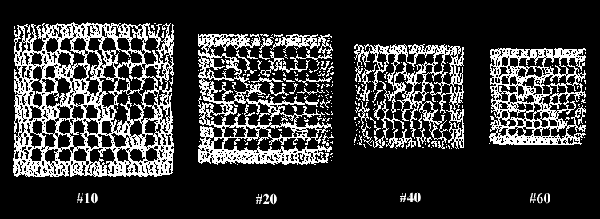
The picture below provides an indication of the change in size of an article when crocheted using the same pattern, but using different thread sizes (with the appropriate size hook as above). Using a finer thread results in a smaller but more finely textured article. Depending on the pattern, some articles may be crocheted in a wide variety of sizes while others go out of shape or do not sit flat if a different size thread is used.
The chart below provides an approximation only of how to determine the finished size of an article crocheted in a thread size other than that specified. Please note that this only works for some patterns and is a rough guide only.
Using the column with the specified thread size, go down until you locate the red 1, then go across to the column with the thread size you wish to use. Multiply the figure shown by the specified size of the article to provide the new finished size.
Example: Assume a doily was crocheted using #60 thread with a finished size of 20cm in diameter and you wished to use #20 thread. Go to the #60 column and run down to the red 1. Now go across to the #20 column and the figure is 1.4. Multiply the original size of 20cm by 1.4 and the finished size should be about 28cm.
| Thread #10 | Thread #20 | Thread #40 | Thread #60 |
| 1 | 0.85 | 0.7 | 0.6 |
| 1.2 | 1 | 0.8 | 0.7 |
| 1.45 | 1.25 | 1 | 0.9 |
| 1.65 | 1.4 | 1.15 | 1 |
The following chart may be useful when using older crochet patterns that specify the old UK imperial size crochet hooks, or American patterns.
The following chart provides approximate equivalent crochet hook sizes for our metric sizes to American sizes. The American sizes appear to vary between brands, especially from 7mm and larger. Many American crochet books now provide a similar conversion guide for hook sizes. Use the tension information, if provided in the pattern, to ensure correct hook selection.
| Metric
(mm) |
American | UK Imperial | ||
| Steel | Aluminium | |||
|
Boye |
Boye | Susan Bates /Annies Attic | ||
|
0.40 |
16 | |||
|
0.50 |
15 | |||
| 0.60 |
6 |
|||
|
0.75 |
14 | 5 | ||
| 0.85 | 13 |
|
||
|
1.00 |
12 | 4 | ||
| 1.10 | 11 |
|
||
|
1.25 |
3 | |||
| 1.30 | 10 |
|
||
|
1.40 |
9 | |||
|
1.50 |
8 | 2.5 | ||
| 1.65 | 7 |
|
||
|
1.75 |
2 | |||
| 1.80 | 6 |
|
||
|
1.90 |
5 | |||
| 2.00 | 4 |
1 or 14 |
||
|
2.10 |
3 | |||
| 2.25 | 2 | B |
|
|
|
2.50 |
2/0 or 12 |
|||
| 2.75 | 1 | C |
|
|
The availability of American crochet patterns provides you with the opportunity to explore your craft by using a greater variety of patterns and techniques than are generally provided by English terminology patterns. While at first American crochet patterns may appear to be written in a foreign language, American crochet is identical to our own Australian/English crochet with the exception of the names of the stitches involved. The following chart provides the equivalent stitch names for American and English crochet stitches.
| Abbrev | American | Abbrev | English |
| ch | chain | ch | chain |
| slip st | slip stitch | sl st | slip stitch |
| sc | single crochet | dc | double crochet |
| hdc | half double crochet | htr | half treble |
| dc | double crochet | tr | treble |
| tr trc |
treble triple crochet |
dtr | double treble |
| dtr dtrc |
double treble double triple crochet |
triptr | triple treble |
| trip tr tr trc |
triple treble triple triple crochet |
quadtr | quadruple treble |
The following charts may be useful when using older crochet patterns that specify weights and linear measurements in the old Imperial system. Only the figures in red are more precise.
WEIGHT
| IMPERIAL | METRIC |
| 1/2oz | 14g |
| 1oz | 28.35g |
| 4ozs | 113.5g |
| 8ozs | 227g |
| 1Lb | 453.6g |
LENGTH
| IMPERIAL | METRIC |
| 1/16″ | 1.5mm |
| 1/8″ | 3mm |
| 1/4″ | 6mm |
| 1/2″ | 1.25cm |
| 3/4″ | 1.9cm |
| 1″ | 2.54cm |
| 3″ | 7.5cm |
| 6″ | 15cm |
| 9″ | 23cm |
| 1ft | 30.48cm |
| 24″ | 61cm |
| 36″ | 91.5cm |
YARDAGE
While balls of thread and yarn are sold by weight, the yardage/meterage is important when determining how many balls to buy – as different yarns with the same weight has a different length of thread. Most patterns will indicate either the yardage or meterage needed, and often this may need to be converted. How do you convert yarn?
Yards to meters: Multiply by .9144. Example – A ball has 300 yards = (300 x .9144) 274.32 metres
Meters to yards: Multiply by 1.0936. Example – A ball has 350 metres = (350 x 1.0936) 382.76 yards.
Below are some approximate equivalents for common yardage.
| YARDS | METRES |
| 100 | 91.44 |
| 200 | 182.88 |
| 300 | 274.32 |
| 400 | 365.76 |
| 500 | 457.20 |
| 1000 | 914.4 |
Recent Hints & Tips Articles

Choosing the right Crochet Hook for You
With so many styles of crochet hooks – how do you choose the right one for you? In this tip we take a look at the different features and how you choose your hook
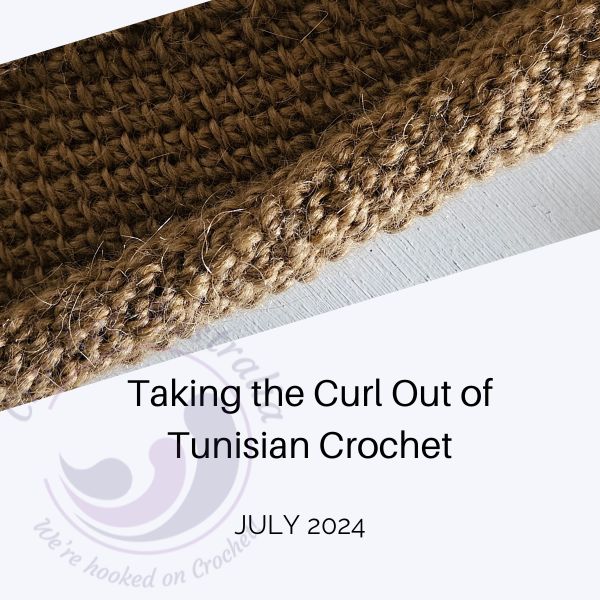
Taking the Curl Out of Tunisian
It is very common for Tunisian work to curl, but there are some techniques and methods you can employ to reduce or eliminate it from your tunisian crochet projects.

Using yarn from the Centre of the Ball – why and how
I often get asked whether it is better to use a ball of yarn from it’s centre or the outside. Read on to hear what I prefer and tips for finding the centre
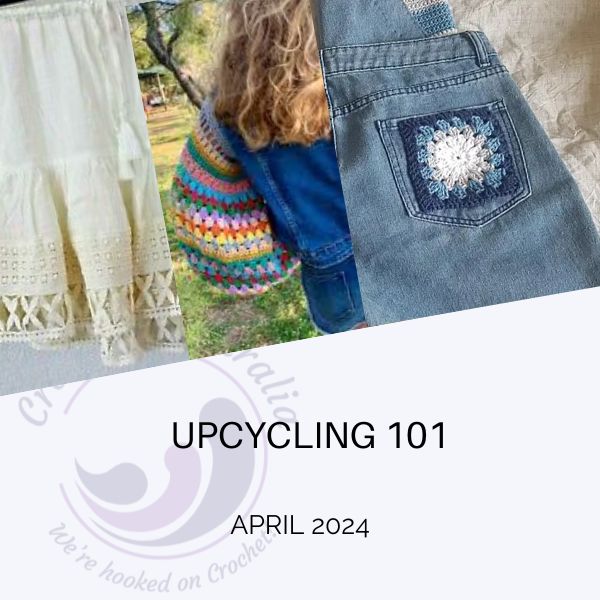
Upcycling 101
You’ve decided to liven up your wardrobe with crochet, knitting or even tatting – where you do you start?