June 1, 2026
So you’ve decided to give Tunisian crochet a go! Tunisian crochet involves a forward pass and a return pass where the work is never turned, and you are looking at the Right Side (RS) of your project the entire time. The forward pass and return pass are counted as one row.
Below are a collection of tips to get you on track to producing beautiful Tunisian crochet projects:
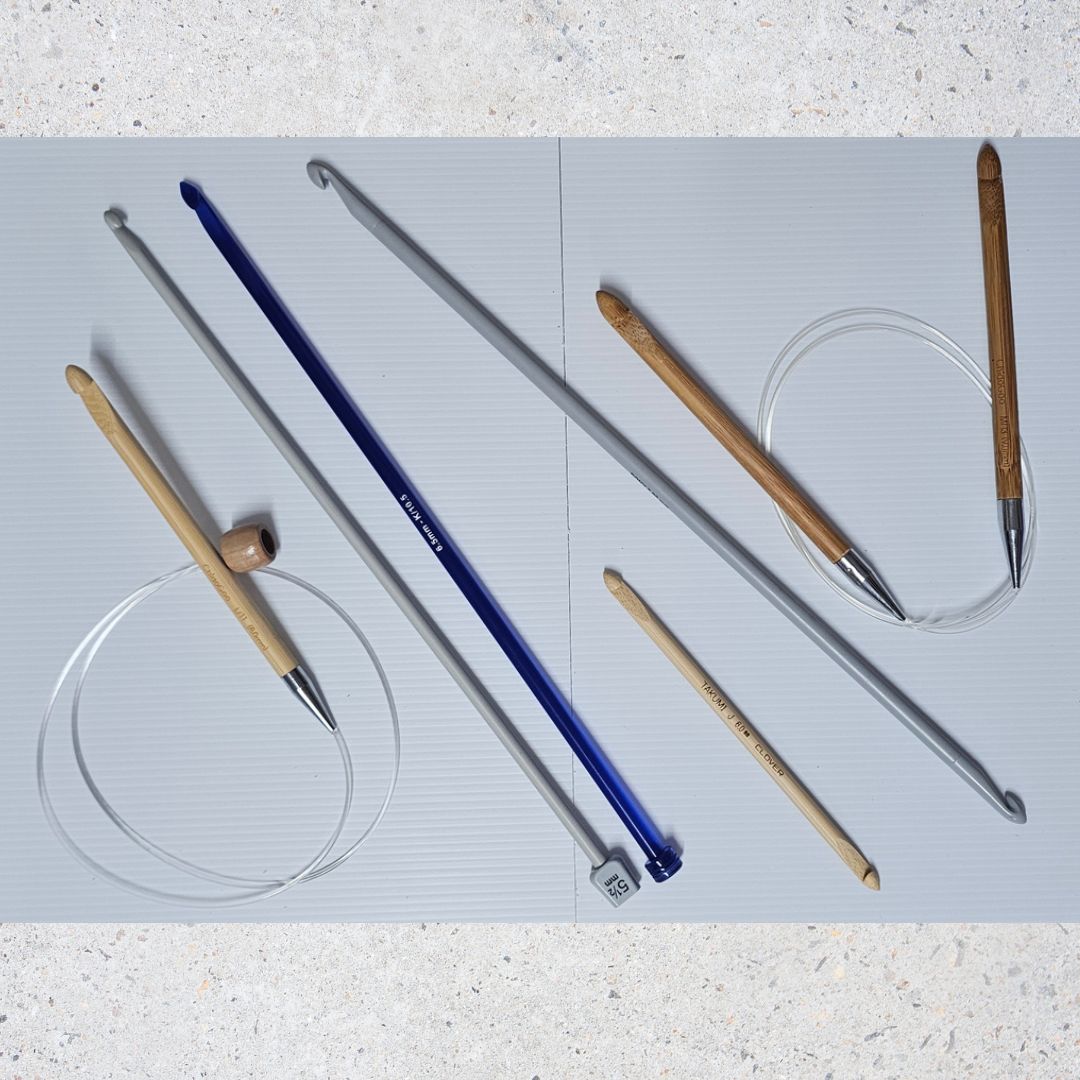
Length: Tunisian hooks differ to normal crochet hooks in that they have a longer shaft (like a knitting needle) and have a stopper at the end. They come in lengths ranging from 25cm – 100cm. You want to get a length that will accommodate the number of loops you anticipate having in one row.
Straight hooks generally go up to 35cm. After this you have the flexible cords to add the length which makes them easier to use.
Size: Due to the stitch structure, it is recommended to use a hook 2 – 2.5 sizes larger than you would normally use for the yarn to give a similar drape. For example if you use 8 ply yarn and would normally use a 4mm hook, it is recommended to use a 6 mm or 6.5mm Tunisian hook.
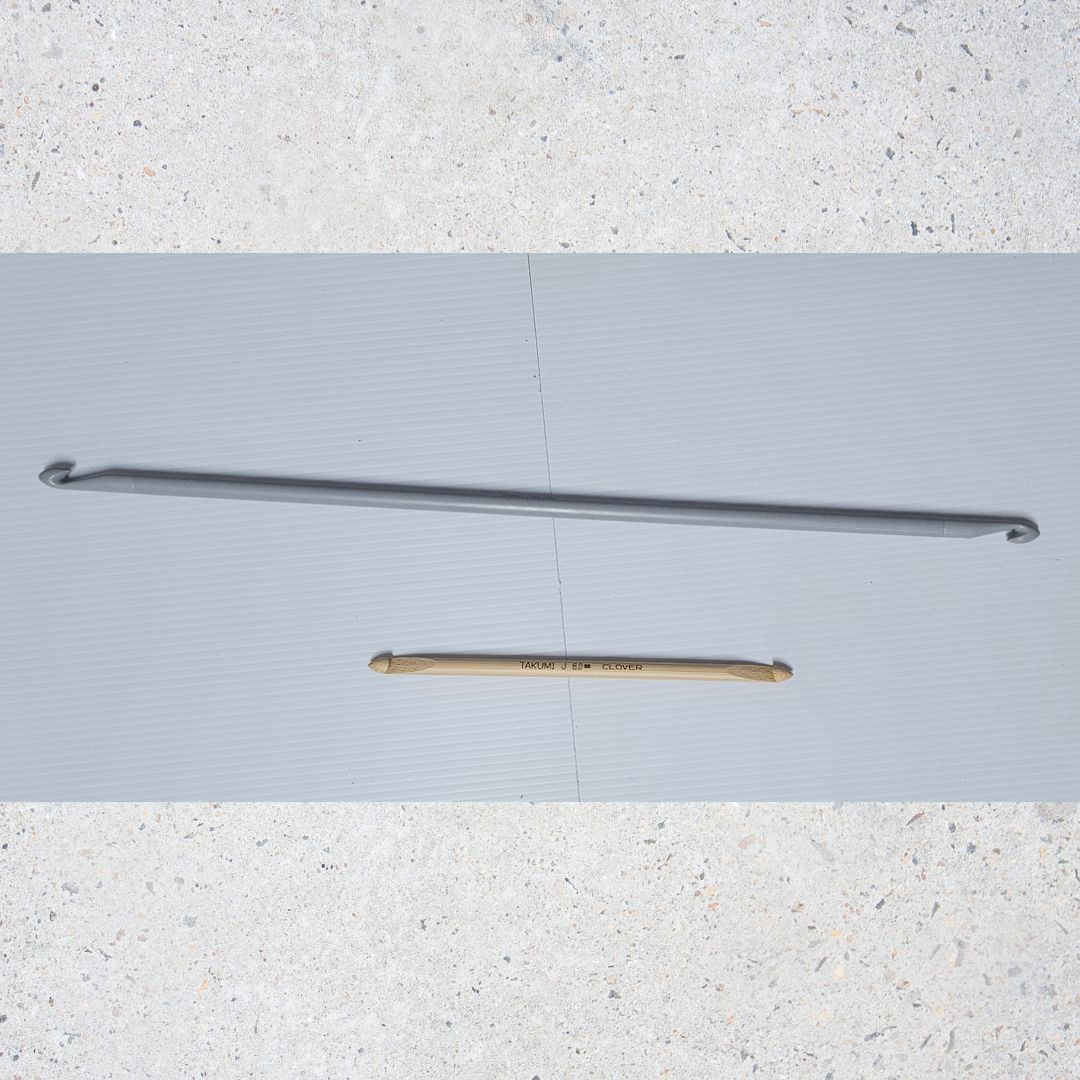 Double Ended Hooks: Like regular Tunisian hooks come in various lengths. They are most frequently used when working Tunisian crochet in the round and can also used for color work in crochet as both hooks can work a different colour of yarn at the same time.
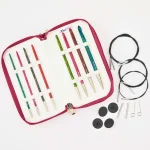
If you anticipate making a wide variety of Tunisian projects, the interchangeable hook sets are great as you are able to switch out different cable lengths with the various size crochet hook heads.
Due to the length of the hook you may find you need to hold the Tunisian hook differently from how you hold a regular crochet hook. You may find that you hold the Tunisian hook more like a knife grip when doing a forward pass (or pickup row) and a ‘pointer’ when making a return pass (or take-off row)
However when making the initial row of chains it is easier to use a regular crochet hook the same size as the Tunisian hook you are using.
As you begin each row, the loop that is left on your hook at the end of the previous row (or after completing your chains) is your first stitch. The action of picking up loops under the rest of the stitches can lead to that first loop stretching such that when you complete the back pass for that row that stitch becomes quite loose in comparison to your other stitches. To avoid this:
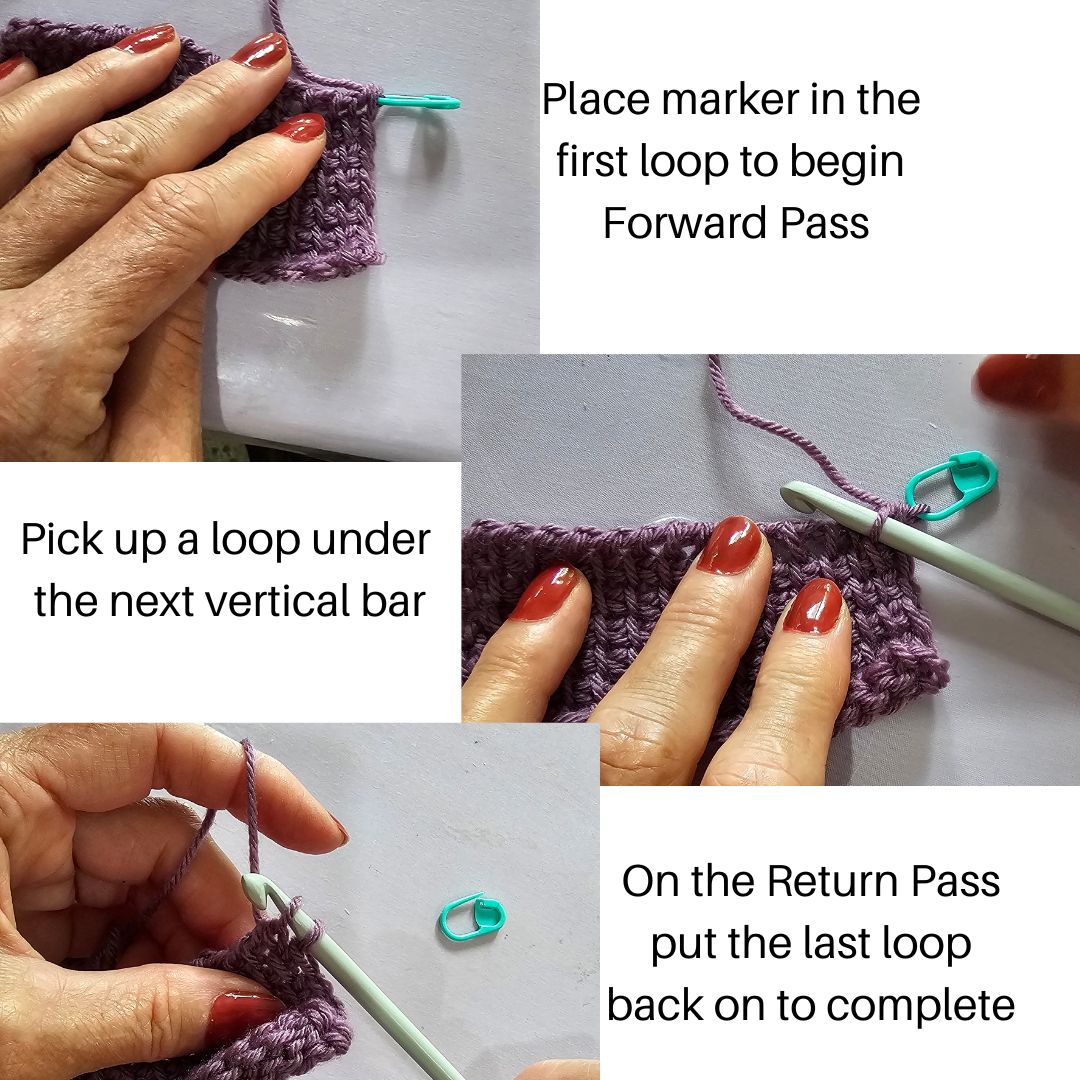 Before beginning your pick-up row, remove the loop on your hook and place this onto a stitch marker. Then proceed to pick up loops under the remaining stitches and complete your back pass until you are back to your last loop. Remove that loop from your hook, place the loop that you are holding on your stitch marker back onto your hook then put the loop you just took off back onto your hook. Then complete your last stitch.
Similar to the beginning stitch, if the last loop is only picked up under the front vertical bar
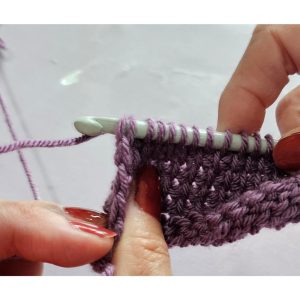 this stitch can become quite loose in comparison to your other stitches. To avoid this:
Pick up a loop under 2 bars of the last stitch. This will be the front bar like the other stitches plus the bar that sits immediately behind it. It will create a ‘V’ along the side of your work.
When you’re getting started with Tunisian it can be difficult to identify the front vertical bar where you need to put your hook under to pick up your loops. Don’t be afraid to pull your work downward to better identify these bars.
With regular crochet we count the stitches when we have finished them. However the structure of the Tunisian stitch makes it difficult to see exactly where the stitch is, so it is easier to count your stitches when they are loops your hook before you begin your return pass. Each loop will generally represent a stitch.
When you finish the return pass on a row you will notice that the stitches look very ‘holy’ when compared to rows further below. This is
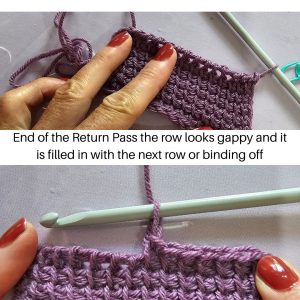 because the next complete row is required to properly complete the stitch. When you complete the number of required rows you must ‘cast off’ in order to ensure the last row is completed. Casting off is like making a row of slip stitches, but don’t pull these too tight.
It is natural for your work to curl up as you begin. There are however some things you can change to minimise the effects. Read our tip to Taking the curl out of Tunisian for some insights.